Improving production efficiency is an important goal for fertilizer manufacturers because stable output, consistent product quality, and lower operating costs directly affect business performance. A well-designed npk fertilizer production process should optimize every stage, from raw material preparation to final packaging, while matching the actual requirements of the fertilizer plant.
Optimize Raw Material Preparation and Production Flow
The first step to improve efficiency is ensuring stable raw material handling. NPK fertilizer production usually involves nitrogen, phosphate, potassium materials, and additives. Their particle size, moisture content, and mixing ratio influence the final fertilizer quality.
A clear npk fertilizer manufacturing flow diagram helps engineers analyze the connection between each production stage, including crushing, batching, mixing, granulation, drying, screening, coating, and packaging.
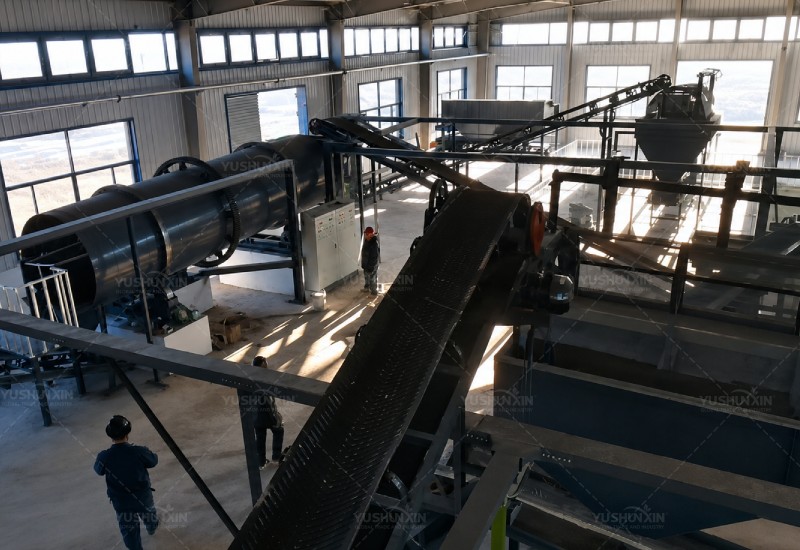
By optimizing material flow, fertilizer plants can reduce unnecessary transportation, improve production continuity, and minimize material loss during operation.
For a better understanding of nutrient management in agriculture, you can also refer to information about International Fertilizer Association and its resources on fertilizer application and industry development.
Improve Equipment Configuration and Plant Layout
Equipment selection has a direct impact on production efficiency. Oversized equipment may increase investment and energy consumption, while undersized equipment can limit future production capacity.
A reasonable npk fertilizer plant layout should consider:
- Smooth raw material movement;
- Short transportation distance;
- Convenient equipment maintenance;
- Sufficient space for future expansion.
A practical layout also improves operator efficiency because each production section can work together with fewer interruptions.
Select Suitable Granulation Technology
Granulation quality determines the commercial value of NPK fertilizer products. Different raw materials and product requirements require different granulation solutions.
Modern npk pellets production technology focuses on improving granule strength, particle uniformity, and production stability. During the process, moisture control, granulation parameters, drying temperature, and screening accuracy all influence the final product.
Manufacturers should select granulation equipment based on production capacity, fertilizer formula, and market requirements instead of choosing equipment only by price.
Increase Automation and Production Control
Automation is another effective way to improve fertilizer production efficiency. Automatic batching systems, centralized control, and intelligent monitoring can improve weighing accuracy and reduce manual errors.
For large fertilizer factories, an npk blending fertilizer production line can integrate batching, mixing, and packaging systems to achieve stable continuous production.
Automation helps manufacturers maintain consistent fertilizer formulas while reducing labor requirements and improving operation reliability.
Conclusion
Improving efficiency in NPK fertilizer production requires a complete evaluation of raw materials, equipment configuration, production layout, granulation technology, and automation level.
Manufacturers can learn more about NPK fertilizer preparation solutions here.
By optimizing each production stage, fertilizer companies can build a more stable production system, improve product quality, and achieve better long-term operating performance.