A snack factory, a fruit processor, or a prepared food plant that moves product between machines by hand usually finds that the carrying adds labor and slows the line. The industrial food processing conveyor for commercial production moves product between washing, cutting, and packing, and a buyer should measure its return against the handling it removes. This article explains how to calculate the ROI for a food machinery purchase.
Which Cost Items Belong in a Conveyor ROI?
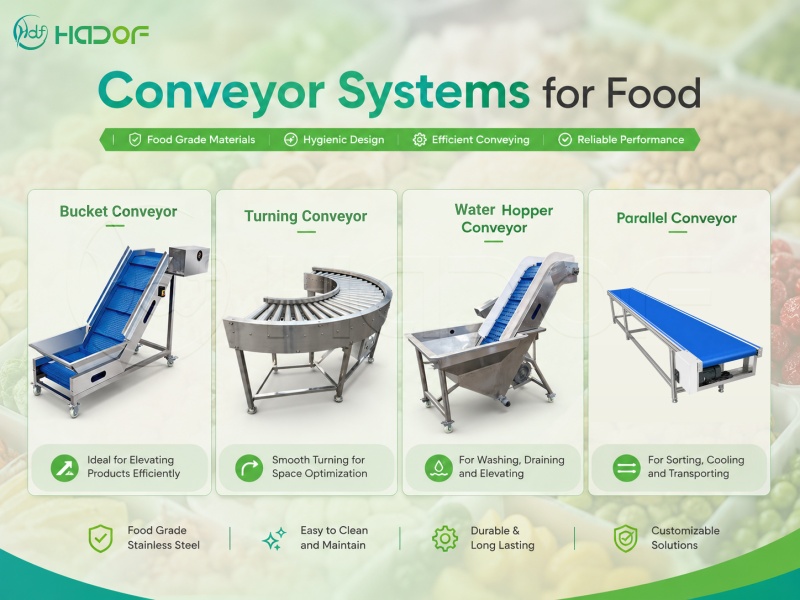
ROI starts with the delivered cost of the conveyor, plus installation and the first year of maintenance, and then adds the labor and the damage the conveyor saves. The food conveyor system with elevator and parallel options covers lifting, turning, and multi-channel conveying, so a buyer records the stage it serves. These items turn a loose food cost estimate into a figure the plant can defend.
How Does the Conveyor Replace Manual Handling?
The conveyor carries the product between the washer, the cutter, and the packer, so no worker lifts and moves the same material. The automatic food processing conveyor for a packaging line keeps the product flowing without a manual handoff. This change removes the repetitive food handling that consumes a shift.
How Does the Conveyor Connect With Packaging?
A conveyor works best when it feeds the packaging machine directly, because a manual transfer slows the line and risks the product. The conveyor connects with a food packaging equipment for a conveyor ROI line, and each handoff needs a matched speed. A smooth connection keeps the food processing system efficient.
How Does the Conveyor Improve Throughput?
A steady conveyor keeps the product moving at a set rate, so the line reaches its target output instead of waiting for workers to carry the next batch. The parallel conveyor also splits the product into multiple channels for packing. This throughput gain is the food production return that the conveyor delivers.
How Should a Plant Measure Payback Months?
Conveyor belt systems replace a manual step, so a plant estimates payback by dividing the delivered cost by the monthly labor and throughput saving. You can review the food processing conveyor manufacturer before a purchase, because spare parts keep the line moving. A measured payback turns the food machinery decision into a budget the plant can approve.
How Does the Conveyor Protect the Product?
The conveyor moves the product gently, so the pieces do not fall or bruise the way a hand transfer can, and a matched belt keeps the product oriented for the next machine. This gentler handling lowers the rejects and the rework that a manual line causes. It is the food preparation benefit that the conveyor adds to the labor saving. A buyer who counts this quality gain makes a more complete ROI.
Conclusion
An industrial food processing conveyor pays for itself through labor, throughput, and damage savings, and a buyer calculates the return by dividing the delivered cost by those monthly benefits. These checks protect the food production budget. If you have interests, you can learn more about https://www.hadofps.com/products/conveyor-systems-for-food/