Setting up a bulk blending (BB) NPK fertilizer plant can transform a trading or distribution business into a value‑adding manufacturing operation. This Step‑by‑Step Guideto NPK Fertilizer Blending Plant Setup walks through the key decisions from concept to commissioning, helping you plan a safe, efficient and profitable facility.
1. Define Your Market and Capacity
Before asking how to set up npk fertilizer blending plant, clarify who you will serve and what they need. Are your main customers large farms, regional dealers, or agro‑input companies? Do they prefer standard formulas or soil‑test‑based prescriptions? Your answers will determine capacity, level of automation, and warehouse size.
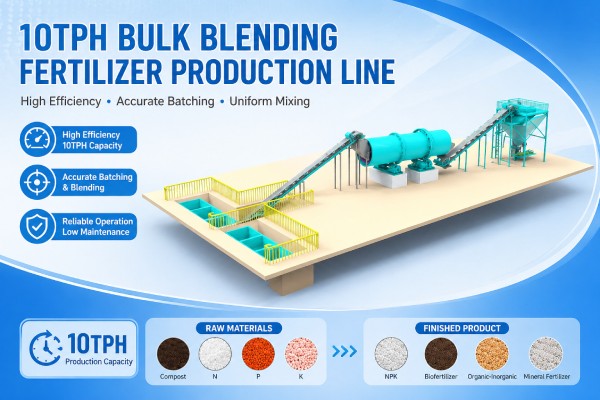
A common starting point for regional operations is a 10 tph npk fertilizer blending production line. Ten tons per hour is often enough to cover seasonal peaks without overspending on equipment, while still leaving room for future expansion and parallel lines.
2. Plan the Layout and Material Flow
Effective plant layout keeps materials moving smoothly from receipt to dispatch while minimizing cross‑contamination and bottlenecks. A typical BB plant flow includes:
- Raw material receiving and unloading
- Screening and temporary storage in bins or silos
- Precise weighing and dosing
- Blending and homogenization
- Conveying to packing
- Bagging, palletizing and finished goods storage
Design the layout so that trucks have clear access, raw materials are protected from moisture, and operators can safely reach all equipment for cleaning and maintenance.
3. Choose the Right Project Delivery Model
Investors with limited in‑house engineering capacity often benefit from turnkey solutions for blend NPK fertilizer production. In a turnkey model, a single supplier handles process design, equipment manufacturing, installation, automation, and commissioning, delivering a ready‑to‑run plant with defined performance guarantees.
This approach reduces coordination risk and shortens the time from investment decision to commercial production. It also ensures that all components are compatible and sized correctly, from conveyors and hoppers to mixers and packaging lines.
4. Select Your Process and Automation Level
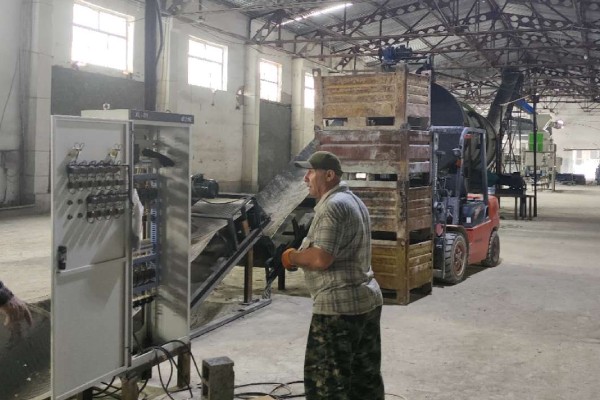
Your process must balance flexibility, quality, and cost. A custom blend npk fertilizer production system gives you the ability to produce different formulas for various crops, soils, and seasons, often within the same shift. This usually requires:
- Multiple raw material bins with independent feeders
- High‑accuracy weighing systems
- Fast, gentle mixers to avoid segregation
- A control system capable of handling many recipes
If your goal is consistent, high‑throughput output, an automatic npk BB fertilizer making system is worth considering. Such systems integrate automated dosing, blending, conveying, and packaging with PLC‑based controls, enabling minimal manual intervention, higher accuracy, and better traceability of each batch.
5. Specify Key Equipment and Utilities
Core equipment for an NPK blending project typically includes:
- Receiving pits or intake hoppers
- Storage bins/silos with flow‑aids to prevent bridging
- Belt or screw conveyors designed to minimize segregation
- High‑precision weighers and feeders
- Horizontal or rotary drum blenders
- Bagging machines and palletizing equipment
- Dust collection and ventilation systems
Additionally, ensure reliable power supply, lighting, compressed air (if needed), and provisions for future capacity upgrades.
6. Implement Quality, Safety, and Compliance
Build quality and compliance into your plant from day one. Establish standard operating procedures for raw material inspection, equipment calibration, mixing uniformity checks, and product sampling. Ensure the facility complies with local regulations on fertilizer registration, environmental protection, worker safety, and labeling.
By following these steps, you can move from concept to a robust NPK BB plant that delivers consistent product quality, operational efficiency, and long‑term profitability. If you are interested in the project, you can visit https://www.mixedfertilizermachines.com/products/npk-fertilizer-blending-plant/ for more details.