Choosing the right fertilizer plant scale is one of the first decisions you need to make before starting a fertilizer business. A small plant may help you enter the market with lower risk, while a large plant can support higher output and long-term growth. However, the best choice depends on your raw materials, target market, budget, land size, labor plan, and expected ROI.
Start with Your Production Goal
Before comparing small and large plants, you should define what you want to produce. Are you planning to make organic fertilizer from animal manure? Do you want to produce NPK compound fertilizer? Or are you considering BB fertilizer blending for local agricultural markets?
Your production goal directly affects equipment selection, workshop layout, automation level, and total investment. A clear fertilizer production project investment plan should include raw material supply, production capacity, equipment configuration, power system, drying requirements, packaging method, and future expansion space.
When Is a Small Fertilizer Plant a Better Choice?
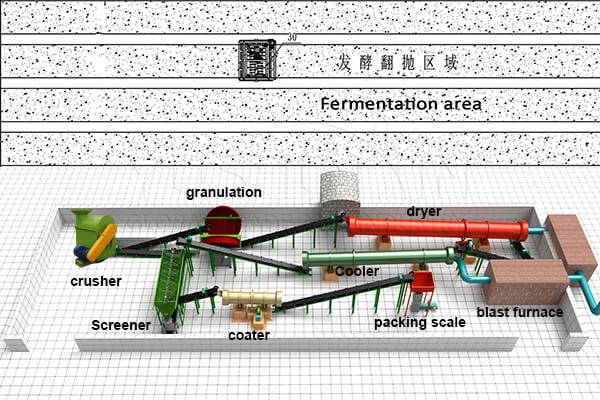
A small fertilizer plant is usually suitable for farms, composting companies, livestock waste treatment projects, and new investors who want to test the market first. It requires less land, fewer workers, and a simpler equipment layout. For example, a small organic fertilizer plant may include composting, crushing, screening, and packing equipment. If granules are needed, a granulator, dryer, cooler, and coating machine can be added.
The small scale fertilizer manufacturing plant cost is usually easier to control because the system has fewer machines and lower installation requirements. This type of project is also more flexible. You can begin with powder fertilizer production and upgrade to granule production later when your sales volume increases.
When Should You Consider a Large Fertilizer Plant?
A large fertilizer plant is more suitable for companies with stable raw material supply, mature sales channels, and higher annual output targets. It often includes automatic batching, mixing, granulation, drying, cooling, screening, coating, conveying, dust collection, and packing systems.
Compared with a small plant, the large scale fertilizer production line cost is higher because it requires stronger equipment, higher automation, more space, and better project planning. However, the unit production cost may become lower when the plant runs continuously and reaches stable capacity. This makes large-scale production more competitive for regional supply, wholesale markets, and export business. Click here to learn more.
Compare Cost, Risk, and Return
A proper fertilizer production plant cost analysis should not only focus on equipment price. You also need to consider civil construction, installation, electrical control, fuel consumption, labor, spare parts, maintenance, packaging materials, and transportation. Sometimes, a cheaper configuration may increase later operating costs because of unstable output, frequent downtime, or limited upgrade space.
For small plants, the main advantage is lower entry cost and faster startup. For large plants, the advantage is higher efficiency and stronger market competitiveness. If your budget is limited, it may be safer to start small and reserve space for expansion. If you already have contracts, raw materials, and sales channels, a larger line may create better long-term value.
Final Advice
There is no single best scale for every fertilizer project. The right choice depends on your business stage and investment ability. Before making a decision, you should discuss your raw materials, target capacity, workshop size, local energy conditions, and packaging needs with an experienced turnkey fertilizer production plant supplier. With a suitable plan, you can control the initial budget and build a production system that supports future growth. If you are interested in the porject, you can visit https://fertilizerequipmentmanufacturer.com/fertilizer-manufacturing-plant-cost/