A fruit snack brand, an export food processor, or a startup investor that plans freeze dried strawberries needs a layout that protects the soft fruit while keeping output steady. The automatic freeze dried strawberry processing line for a medium-scale factory joins washing, dewatering, freezing, vacuum drying, sorting, and packing in one flow, and the arrangement of those stages decides both quality and cost. This article explains the process steps and the layout choices that keep a food processing system efficient.
Which Process Steps Belong in a Freeze Dried Strawberry Line?
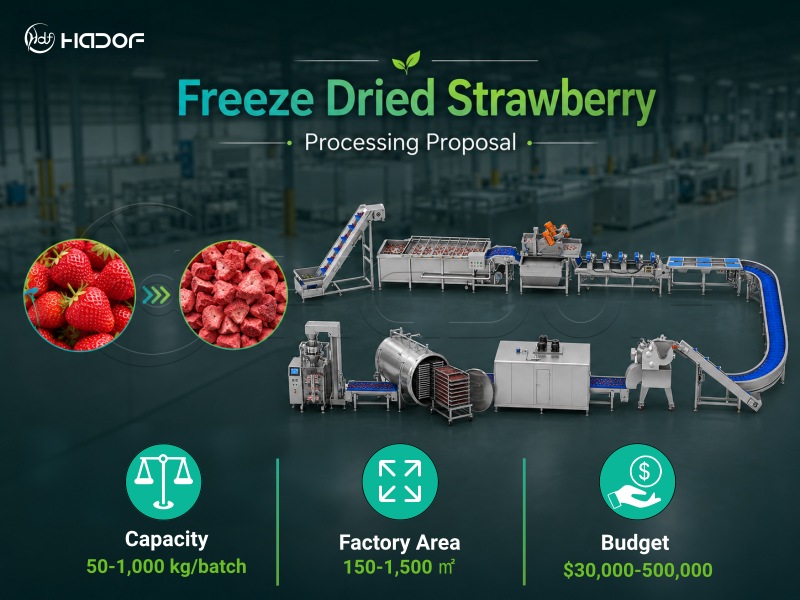
A complete line follows raw material cleaning, surface water removal, freezing treatment, vacuum freeze drying, sorting, weighing, and packaging, and some products add slicing or dicing before freezing. The industrial strawberry freeze drying production line with washing and sorting uses a bubble washing machine to remove mud and residue, a vibrating dewaterer to lift surface moisture, and a vacuum freeze dryer to remove frozen water through sublimation. Each step feeds the next, so the order protects the soft fruit instead of crushing it. A buyer who maps this sequence understands where the food manufacturing value actually comes from.
How Does Washing and Dewatering Protect Strawberry Shape?
Strawberries are soft, so the washing and dewatering steps must remove impurities without bruising the fruit. The freeze dried strawberry processing plant with IQF and vacuum drying uses a SUS304 bubble washing machine that lifts mud and pesticide residue gently, and a vibrating dewatering machine that removes surface moisture before freezing. Less surface water means less ice formation, which protects the strawberry shape in the IQF tunnel. A factory that controls moisture at this early stage keeps the food preparation quality high and the freeze drying cycle efficient.
How Does IQF Freezing and Vacuum Drying Fit the Layout?
The layout should move washed, dried strawberries into the IQF tunnel and then into the vacuum freeze dryer without a long warm hold, because delay lets moisture return. The IQF tunnel freezes individual berries so they stay separate, and the vacuum freeze dryer then removes the frozen water through sublimation while preserving color and texture. A medium-scale factory arranges these two machines close together and keeps the belt speeds matched. This arrangement protects the food processing flow and reduces the energy and time a batch spends between stages.
How Does the Line Connect With Air Drying and Packing Equipment?
A freeze dried line also needs surface drying before freezing and a packing step after drying, and each handoff must be smooth. The line feeds an parallel air dryer for strawberry processing after dewatering, and the dried product then moves to sorting, a multi-head weigher, and an automatic packing machine. A matched height and speed keep the berries moving without hand transfer, which protects their shape and cuts labor. This connection turns the food equipment into one continuous system rather than separate machines.
How Should a Factory Plan the Layout for Medium-Scale Output?
Strawberry processing rewards a straight layout that shortens the distance between washing, freezing, drying, and packing, because every transfer risks damage and time. You can review the strawberry processing line manufacturer before a purchase, and that review shows the engineering and layout support behind the proposal. A factory that plans drainage, power, and product flow first avoids a cramped food manufacturing floor. These choices keep the production line efficient at medium scale.
Conclusion
A medium-scale food factory lays out a freeze dried strawberry line by keeping washing, dewatering, IQF freezing, vacuum drying, sorting, and packing in a short, smooth path. These layout choices protect the soft fruit and keep the food production line efficient. If you have interests, you can learn more about https://www.hadofps.com/solutions/freeze-dried-strawberry-processing-proposal/