When you plan to build an NPK fertilizer production project, understanding the role of each equipment section can help you create a more suitable production solution. A complete production line is not only a combination of individual machines but also an integrated process where feeding, batching, mixing, granulation, drying, and packaging work together.
Your equipment selection can depend on raw materials, fertilizer formulas, production capacity, and final product requirements. By evaluating these factors, you can develop a system that matches your business goals.
What Equipment Is Used for Raw Material Handling and Batching?
The first stage focuses on preparing and measuring different fertilizer materials. Common materials may include urea, ammonium phosphate, potassium sources, and other additives.
Accurate weighing and feeding help maintain stable material ratios during production. A PLC controlled NPK fertilizer production line can connect automatic batching, feeding, and monitoring systems to support consistent formula management.
For specific raw materials, the feeding and mixing configuration can be adjusted according to their characteristics. For example, an NPK fertilizer production line for ammonium sulfate can be designed around the material properties and production requirements.
How Do Mixing and Granulation Equipment Create Fertilizer Granules?
After batching, materials enter the mixing stage to achieve a more uniform composition before granulation.
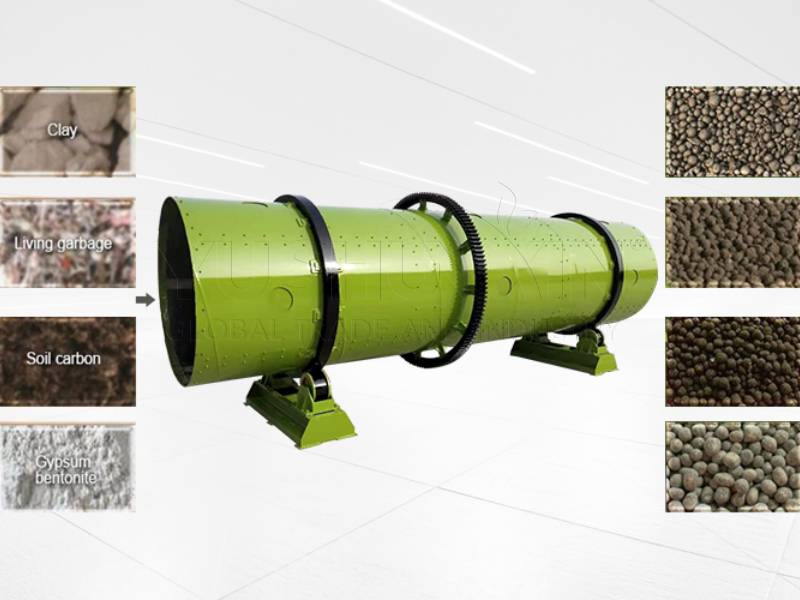
The NPK fertilizer granulation process may include different technologies depending on your raw materials, product requirements, and production targets. Equipment selection can involve mixers, granulators, dryers, coolers, screening machines, and coating systems.
For customers who prefer moisture-assisted granulation methods, a wet granulation NPK fertilizer production line can combine multiple processing stages into a complete fertilizer manufacturing workflow.
The granulation section influences the final particle size, appearance, and product performance, so matching the process with your fertilizer goals is an important step.
What Supporting Equipment Completes the Production Line?
Besides batching and granulation equipment, a complete NPK fertilizer production line may include drying, cooling, screening, coating, and packaging systems.
Drying equipment helps reduce moisture after granulation, while cooling equipment prepares fertilizer particles for further handling. Screening systems separate qualified particles from oversized or undersized materials and help maintain product consistency.
Packaging equipment connects the production process with storage and transportation. The configuration can vary according to bag size, production speed, and automation requirements.
How Can You Select the Right Equipment Partner?
Choosing equipment involves more than selecting machines. You can also consider process design experience, technical support, installation guidance, and long-term service.
Working with an experienced NPK fertilizer machinery supplier allows you to discuss your raw materials, production capacity, and expected fertilizer products before developing a final solution.
Click here for more details to explore complete NPK fertilizer production solutions.
Build an NPK Fertilizer Production Solution That Fits Your Needs
Every fertilizer project has different requirements. Raw materials, production capacity, fertilizer formulas, and automation levels all influence the final equipment configuration.
By understanding how each section works together, you can create an NPK fertilizer production line that supports your current production goals and future development.
For more information about NPK fertilizer production equipment and solutions, you can visit https://www.shunxin.eu/npk-fertilizer-production-line/