A 20 T/H NPK mixing plant usually serves investors and operators who plan to build a fertilizer plant with stable throughput, predictable labor input, and controllable fertilizer manufacturing plant cost. This kind of bulk blending fertilizer production process focuses on physical proportioning and uniform mixing rather than chemical reaction, so the procedure emphasizes accurate batching, low segregation during transfer, and reliable packaging. Meanwhile, a complete bulk blend line also influences fertilizer plant setup decisions because machine selection, layout length, and automation level directly affect the total budget, the final quotation, and the long-term operating cost. Therefore, a clear process description helps a buyer evaluate equipment configuration and estimate the BB fertilizer factory cost more rationally.
What raw materials suit bulk blending fertilizer production in a 20 T/H NPK mixing plant?
A 20 t/h bulk blending (BB) fertilizer line usually accepts dry, free-flowing granular materials with compatible particle size and strength, because bulk blended fertilizer quality depends on stable flow and low dust. Common nitrogen sources include urea granules, ammonium sulfate granules, and calcium ammonium nitrate granules. Common phosphorus sources include granular DAP, granular MAP, and some forms of triple superphosphate granules. Common potassium sources include granular potassium chloride (MOP) and granular potassium sulfate (SOP). In addition, a BB fertilizer preparation can include filler or conditioner materials such as granular limestone, dolomite granules, gypsum granules, and inert carrier granules. For value-added NPK blending, micronutrient granules such as zinc sulfate granules, boron-containing granules, and magnesium sulfate granules often fit bulk blend fertilizer manufacturing when the granules match the main materials in size. This raw material selection logic supports a smoother BB fertilizer production process and reduces rework cost in a fertilizer production plant.
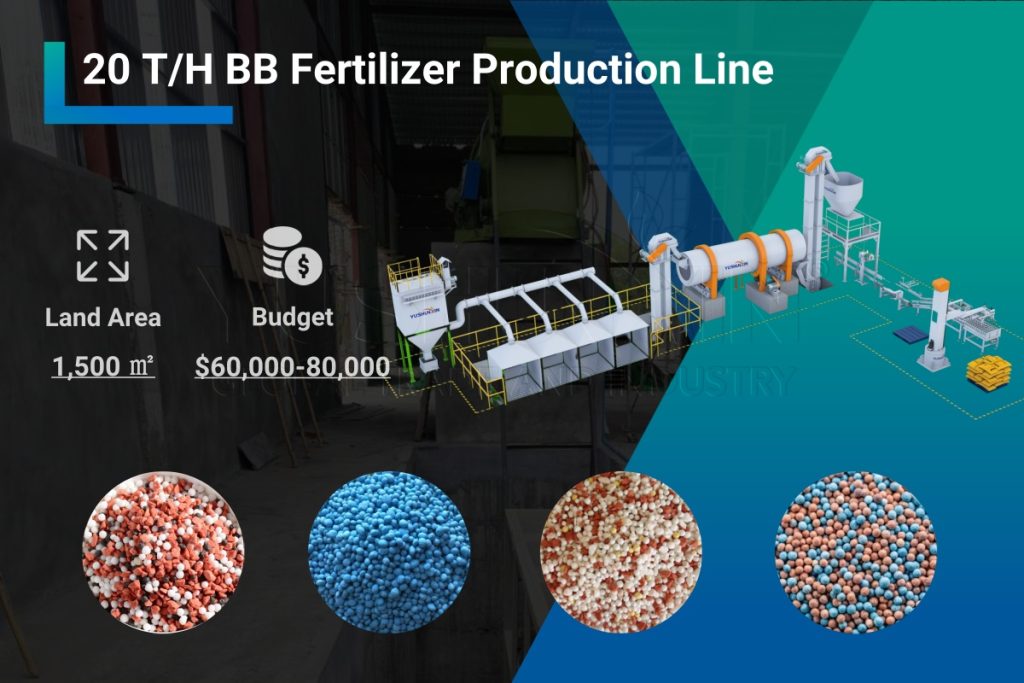
How does accurate batching and feeding control the NPK blending process and plant cost?
A complete NPK mixing procedure usually starts with storage and measured dosing, because every later step depends on recipe accuracy. A fertilizer factory commonly uses an automatic batching machine or a static batching system with multiple bins, because each bin can store one component for NPK blended fertilizer recipes. Each scale module and gate structure directly impacts weighing tolerance, so equipment grade influences the price and the final quotation for a fertilizer manufacturing plant cost plan. Moreover, a stable feeder and anti-arching design reduce flow interruption, so the fertilizer plant setup can run closer to 20 T/H without oversizing machinery. A bucket elevator often connects the batching section to the mixing section, and the elevator configuration affects height, steel structure length, and installation budget. Therefore, a buyer usually evaluates batching accuracy, bin quantity, and conveying distance as key cost drivers for establishing a fertilizer plant dedicated to 20 t/h bulk blending fertilizer production.
How does the bulk blending mixer section complete uniform mixing at 20 T/H?
A BB fertilizer production line typically uses a dedicated bb fertilizer blender or a drum type bb fertilizer mixer for large capacity, because uniformity defines the commercial value of npk mixed fertilizer. The mixer chamber design, inner lifter arrangement, and rotating speed determine mixing time and mixing evenness, so these parameters shape the npk mixing process capability at 20 T/H. In addition, a bulk blend mixer should control particle breakage, because broken particles create dust and segregation that lower bulk blending fertilizer appearance and bag-to-bag consistency. A realistic fertilizer manufacturing plant also manages material transfer after mixing, because sharp drops and long chutes increase separation of heavy and light granules. Consequently, a practical npk blending process often includes short conveying routes and suitable discharge control to keep the bulk blended fertilizer composition stable. This section usually represents the “core machinery” investment in a BB fertilizer factory cost analysis because the mixer selection largely determines throughput ceiling and maintenance frequency.
Why do crushing, recycling, and screening choices influence the bulk blend fertilizer manufacturing budget?
A 20 t/h bulk blending fertilizer production process often needs limited size adjustment even when the plant does not granulate, because raw materials from different suppliers may show lumps or oversize particles. A crushing machine such as a vertical crusher or a chain crusher can handle caked urea, compacted MAP, or agglomerated fillers, so the bb fertilizer making process maintains smooth batching and avoids scale errors. However, the crushing system adds motor power, wear parts, and dust-control interfaces, so the fertilizer plant setup budget changes with crusher type and capacity margin. Some fertilizer factories also add a simple screening step when they target premium npk blended fertilizer grades, because screening reduces oversize content that can separate in bags. Even when a plant omits screening, a defined rework route for off-spec material can protect the production rhythm and lower overall operating cost. Therefore, auxiliary equipment selection directly influences BB fertilizer factory cost, both in initial price and in long-term spare-part cost.
How do packaging and automation finalize the bulk blended fertilizer production process and protect margins?
A 20 T/H NPK blending line usually ends with weighing, bagging, and sealing, because bulk blend fertilizer customers buy by net weight and consistent bag appearance. A packing machine with net-weighing scale, fast/slow feed control, and stable clamping can improve bag accuracy, so the fertilizer production plant reduces giveaway cost and stabilizes gross margin. Moreover, automation level changes labor budget, because a semi-automatic packing section needs more operators than an automatic bagging system with conveyor and sewing integration. Dust collection interfaces and sealed transfer points also matter, because clean operation reduces product loss and improves workshop management cost. Finally, a clear control logic for recipe switching supports multi-formula npk mixing and bulk blending fertilizer manufacturing with fewer stoppages, so the factory increases effective output without expanding the machine list. These packaging and automation decisions often finalize the fertilizer plant cost model when an investor requests a detailed quotation for a BB fertilizer production plant.
Conclusion
A complete bulk blending fertilizer production process in a 20 T/H NPK mixing plant usually includes raw material compatibility planning, accurate batching, stable conveying, efficient bb/bulk blend mixing, optional crushing for lump control, and reliable packing for net-weight sales. This total procedure helps an investor estimate fertilizer plant setup needs, compare equipment price structures, and control BB fertilizer factory cost with a clear configuration path. A professional fertilizer equipment manufacturer- Yushunxin can provide integrated machinery options for bulk blending, npk blending, and bagging sections to match different budgets and production targets. You can visit: https://www.fertilizerproductequipment.com/20-t-h-npk-fertilizer-blending-production-line/